
A missed opportunity never figures in the balance sheet. The customers we failed to understand, the products they would buy and the prices they would pay – none appear as a rumor. For the meeting room they do not exist and have never existed. Marketing costs are highly visible in the boardroom. When its contribution to business value is unproven, marketing becomes an easy target for the first and hardest cuts.
The damage extends beyond budget cuts. Marketing has lost much of its mandate. Product transitions to product management, pricing to sales, and placement across channel, commerce, and e-commerce teams. The CMO is left with the task of promotion, with the task of generating demand for decisions made elsewhere.
Marketing’s understanding of the customer should inform all four Ps. Yet its dashboards largely measure promotional performance. Fast data helps optimize campaigns, while slow data links customer needs to revenue, margins and profits. Both are essential to drive decisions that drive business value as AI accelerates execution.

Make sense of the gap between the marketing mandate and its functions
Daniel KahnemannThe distinction between fast, automatic thinking and slow, deliberate thinking offers a useful lens for understanding this gap. Marketing relies heavily on fast data.
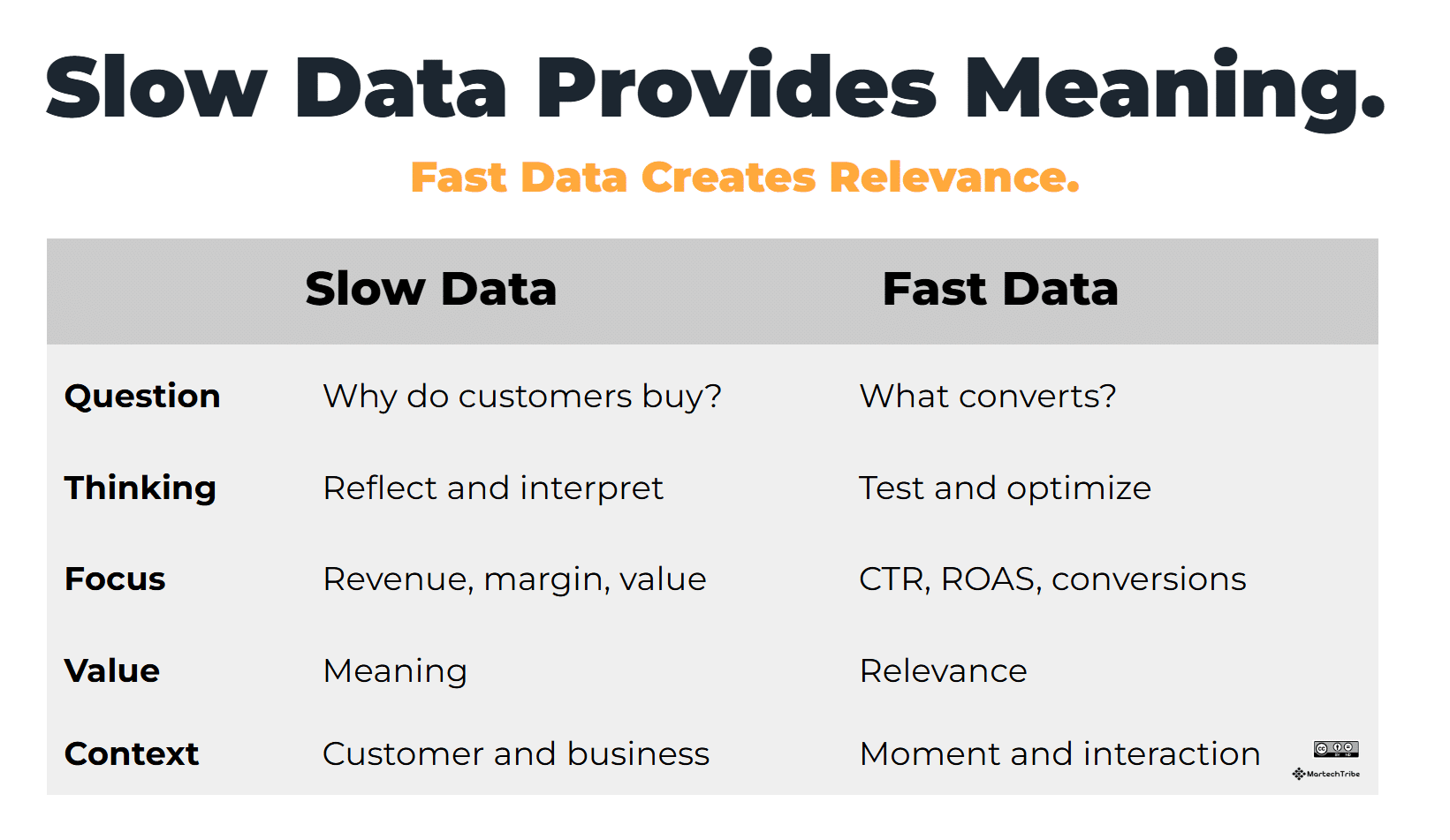
- Fast data supports the immediate marketing decisions: improving conversions, CTR and ROAS. Fast describes how quickly decisions are made, not how quickly data moves between systems.
- Slow data supports the deliberate analytics: understanding customer needs and how to serve them generates revenue, margins and value. Slow describes deliberate thinking over time, not slow or outdated data.
Fast data creates relevance. Slow data provides meaning. Without this meaning, marketing can demonstrate more clicks and conversions while leaving revenue growth, margin and profit unexplained. It’s like telling a story without clues or plot.
AI makes this gap more urgent by accelerating analysis and execution. Without customer understanding that gives direction to these drivers, marketing risks losing further influence on all four Ps. The CMO’s opportunity is to establish this understanding, demonstrate the value of marketing, and claim a strategic role on the board.
10x your SEO with Semrush for business.
The most powerful SEO platform in the world, created specifically for businesses.
@media (max-width: 768px) { .headline-responsive { font-size: 30px !important; line height: 1.3 !important; } }
How quickly the data answers the dashboard’s marketing questions
Which message works? Which button converts? What interaction should happen next? Fast data answers these questions. It shows what the customer is asking for or doing now, helping marketing adapt campaigns, offers and interactions. The dashboard shows the results: reach, traffic, leads, conversions, acquisition costs and ROAS. These metrics help evaluate marketing performance.
But the reach and traffic didn’t come in. Leads and conversions do not represent revenue growth by definition. ROAS is not profit. The following table shows this gap: Marketing can report improvements on the left without demonstrating improvements on the right.

Take ROAS. A campaign can generate more attributed revenue while discounts, product costs and returns leave less profit. The dashboard can show a winning campaign even if the company earns less from each sale. Improving the reported return on advertising does not automatically improve the company’s return.
Or take conversions. More customers buying once doesn’t tell us whether they will return, purchase at full price, or whether the service will cost more than they contribute. A conversion records a transaction. Understanding its value requires looking beyond that moment.
Your CEO asks business questions that slow data responses
Your CEO asks about revenue, growth, margin and profit. If marketing responds with traffic, conversions, acquisition costs and ROAS, the question remains unanswered.
Slow data starts on the right of the table above and the value is decoded. If the company needs higher margins, which customers and products help achieve them? Why do those customers buy? What makes them willing to pay full price? If the company needs revenue growth, where is the opportunity: acquire customers, retain them, or develop existing relationships?
Slow data supports value engineering: tracking how solving a customer problem creates value for the customer and the company. What results does the product offer? How much is this result worth to the customer? How does its supply contribute to revenue, margin or growth? These questions give marketers a basis for deciding what to promote, to whom, and why.
Slow data includes thoughtful analytics: questioning assumptions, interpreting behavior, and investigating how customers create value.
How slow data reveals what drives customer value
Slow data answers the questions the CEO needs to know. Who is our customer? What problem are they solving with our product? What is their value over time? What do they need to understand about our product, promotion, price and location? Customers can’t always explain what drives their decisions. We need to look at what they buy, how they use the product, when they return and where their behavior differs from what they say.
Take the discount campaign above. Customers convert when the price drops. But why did they need the discount? They may have understood the product and waited for a deal. Or they may not have understood the value well enough to justify the full price.
The conversion appears the same in the dashboard. Value engineering asks whether lowering the price or better explaining the value produces a stronger outcome for both the customer and the company. It’s about understanding the structure of your income.
AI needs context. Slow thinking gives it meaning.
Slow data is nothing new, but artificial intelligence changes its value. As AI makes it easier to generate analytics, recommendations, and campaign variations, the constraint shifts from finding an insight to finding the insight that matters. Quick data provides immediate context: what the customer is asking or doing now. Slow data provides the broader customer and business context needed to interpret those signals through deliberate thinking.
Take our discount example. At the moment level, a customer clicks on an offer. At the session level, they compare products and delivery options. Travel-wise, they seem ready to buy. These signals may suggest sending a promotion now. But the relational context reveals that they recently purchased the product at full price and are still awaiting delivery. Interpreting immediate signals alongside that story changes the relevant action from sale to resolution.
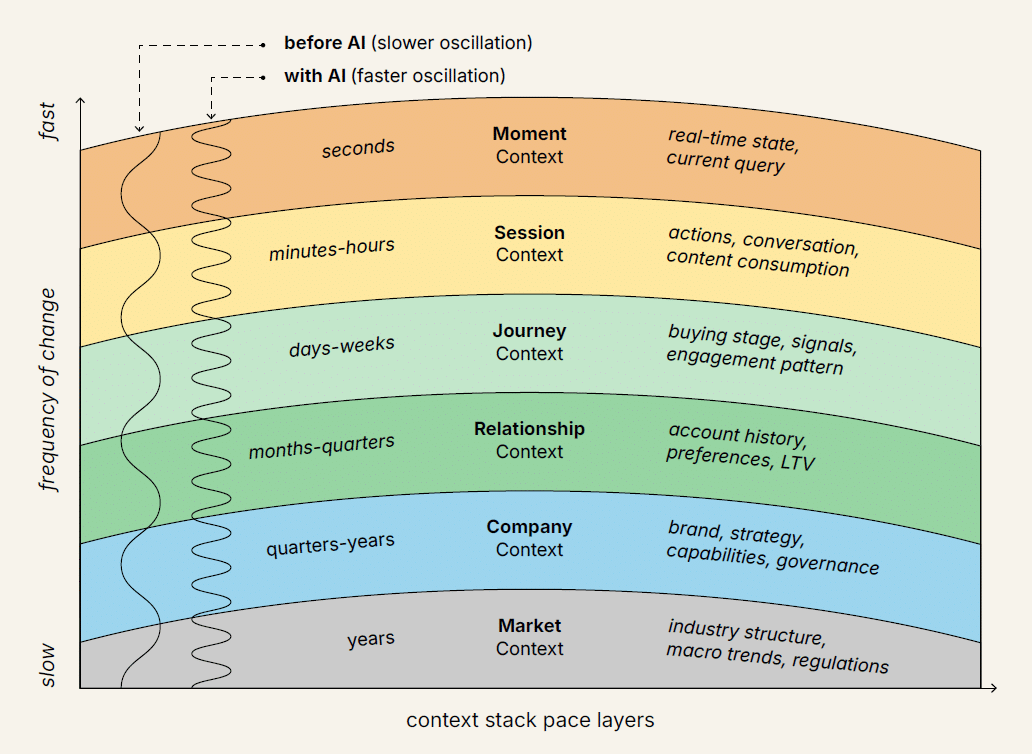
The figure describes how the context changes at different speeds. Slow thinking can examine any level, including something that happened a few seconds ago. A service failure can immediately change the customer’s situation. Understanding what this means for the relationship requires reflection. The speed of the event and the way of thinking applied to it are different things.
How CMOs can leverage slow thinking while AI accelerates execution
For the CMO, the main task is to push the value fabric forward. If customers hesitate because they don’t understand the value of the product, that discovery should shape campaign briefs, product pages and instructions given to the AI. If repeat purchases drive profitable growth, acquisition campaigns should be evaluated against repeat customers and the value they bring, as well as the first conversions they generate.
This also changes the mandate we give to AI. Inviting him to “increase conversions” leaves open the consequences for the business. Asking them instead to “help customers understand the value of the product and increase full-price purchases” poses a problem for the customer AND a commercial objective. We can then test whether better explanations improve purchases, margins and returns. The dashboard measures progress against a thoughtful goal.
Artificial intelligence will make fast engines faster. Slow thinking helps determine what these engines should be pursuing and how to interpret their results. Can your organization explain what the customer is trying to solve and how meeting that need creates business value? If it’s possible, does this understanding actually drive your campaigns, dashboards and AI?
The post Your CEO Wants Answers Your Dashboard Can’t Give appeared first on MarTech.