
American adults are reading a book of any kind in 2022.
Still, it’s important to note that while library visits have not yet returned to pre-pandemic levels, they are increasing, in part because their program offerings are more varied. expansion. In the United States, adults and children made more than 800 million visits to a library in 2023, an average of 2.2 million visits per day and almost double the number in 2021. There are more than 17,000 public libraries in the United States, more than the number of hospitals or McDonald’s.
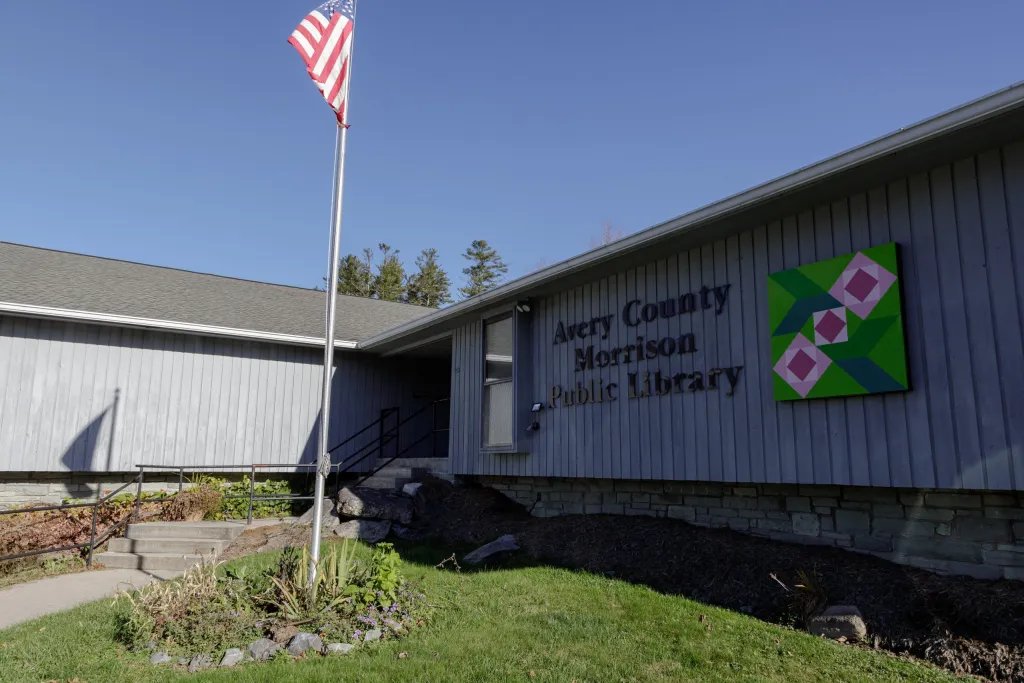
Ask most Americans what critical infrastructure looks like, and they’ll likely describe a bridge, a power grid, or a broadband cable. They probably won’t mention the single room bookcase in Donnelly, Idaho, which supports remote community families with after-school care, or the more than 2,600 free summer events hosted by the District of Columbia Public Library System.
But that’s exactly the kind of vital role that public libraries play every day in this country. If we want to ensure that families can access all the resources and programming that libraries offer, we need a better way to deliver library services.
The increase in visitation is evidence of a growing public reliance on libraries, just as federal and state budget cuts starve other community resources.
Related: There’s a lot going on in classrooms from kindergarten through high school. Follow our free weekly K-12 education newsletter.
From cradle to career and beyond, public libraries connect community members to preschool literacy programs, after-school enrichment, English classes, workforce training, academic and professional guidanceHigh-speed internet, passport and notary services and much more.
Walk into a public library on a Tuesday afternoon and you might find a “The STEAM Team” session during which elementary students make fairy slime, middle school students build catapults out of popsicle sticks or high school students produce podcasts.
Come back Saturday morning and the same room will be filled with toddlers and caregivers singing along, which pediatricians say is exactly the kind of early language exposure that predicts school readiness.
This is a program that rivals — and often exceeds — what parents spend hundreds of dollars on at private enrichment centers. And it’s free.
It is high time to treat libraries like the essential community institutions that they are. Because free isn’t always available.
Philanthropy can help – and the precedent goes back more than a century. Andrew Carnegie funded the construction of nearly 1,700 public libraries across the country, betting that broad access to knowledge was the backbone of a democratic society.
This gamble paid off. Today, philanthropy must redouble its efforts.
Research watch that parents seek out educational resources through Internet searches, school websites, and word of mouth. But while searching for “free tutoring near me,” “college writing help,” and “STEM camp for kids,” many public libraries simply rely on promotional methods such as flyers posted on their bulletin boards, targeting people who already visit the library.
What’s missing is the modern infrastructure that turns a library’s offerings into something a working parent can actually find on their phone at 9 p.m. — visible on the platforms families already use, integrated with the schools and community organizations they already trust, and supported by staff capacity and shared technology to keep them up to date.
Public funding rightly funds library buildings, collections and staff. Philanthropy can do something different: support innovation, test new approaches, create technologies that can be shared by thousands of libraries, and help spread effective models nationally to ensure that the services communities rely on are visible, accessible, and responsive to changing needs.
Related: OPINION: Book bans drag libraries into damaging culture wars that undermine their purpose
Libraries don’t just need a single pilot project or a one-off digital transformation. They need sustained investment in connections between libraries and the public.
In practice, that means paying for libraries to hire staff who can reach families online, creating shared technology that small, rural libraries can use without needing their own tech teams, and partnering with educational websites that parents already use to find information.
Closing this gap between programs and access does not require reinventing anything; this requires connecting what already exists to what families are already looking for.
Showing public library programs alongside school data shouldn’t be a burden. Schools and community organizations can list library events as well as after-school options and direct parents to free resources that many are unaware of.
The issues go beyond access to programs. Americans are losing faith in common institutions, but libraries are one of the few we still trust — and one of the few civic spaces that still bridge the divides that seem to continue to widen everywhere else.
Letting libraries slide into invisibility while families who need them most search online is not a choice we should make.
The buildings are already there. The programming is already extraordinary. Today’s call to action for philanthropy is to strengthen one of America’s most trusted institutions so that every family can find, access, and benefit from the opportunities libraries already provide.
Jon Deane is CEO of Great schoolsa nonprofit school information platform, helping more than 40 million parents each year access reliable school data and make informed decisions about their children’s education.
Contact the opinion editor at opinion@hechingerreport.org.
This story about public libraries and education was produced by The Hechinger reportan independent, nonprofit news organization focused on inequality and innovation in education. Register with Hechinger weekly newsletter.
The article OPINION: Americans are losing faith in common institutions, but public libraries are one of the few we still trust, appeared first in the Hechinger Report.