
Since 2023, cell phone use during the school day has been banned or restricted at least in 40 states and the District of Columbia, in the hope that reducing digital distractions would help students focus on their classes.
So how does it work?
Last week, researchers at Harvard University published the third study of the limits of cell phones in American schools and, like the previous two, it brought remarkably little academic benefit. Media reports trumpeted the study’s findings gains in student success as proof of reality progress. But read the fine print: Students’ combined math and reading scores, as measured by MAP tests, increased by only 0.0087 of an additional standard deviation.
Readers, I try to avoid talking about abstract statistical units, but in this case they are important because they show how tiny the academic gains were. The estimated improvement is less than one hundredth of a standard deviation, which represents a very small change in student performance. In graduate school, I was taught that even an improvement of a tenth of a standard deviation – or more than 10 times the magnitude of this effect – is quite small.
But the Harvard researchers translated that 0.0087 improvement into one to two weeks of additional learning per year. They called the gains “modest” and said they could add up over time and help students recover half of the learning losses accrued between 2013 and 2020, before student performance plummeted further during the pandemic.
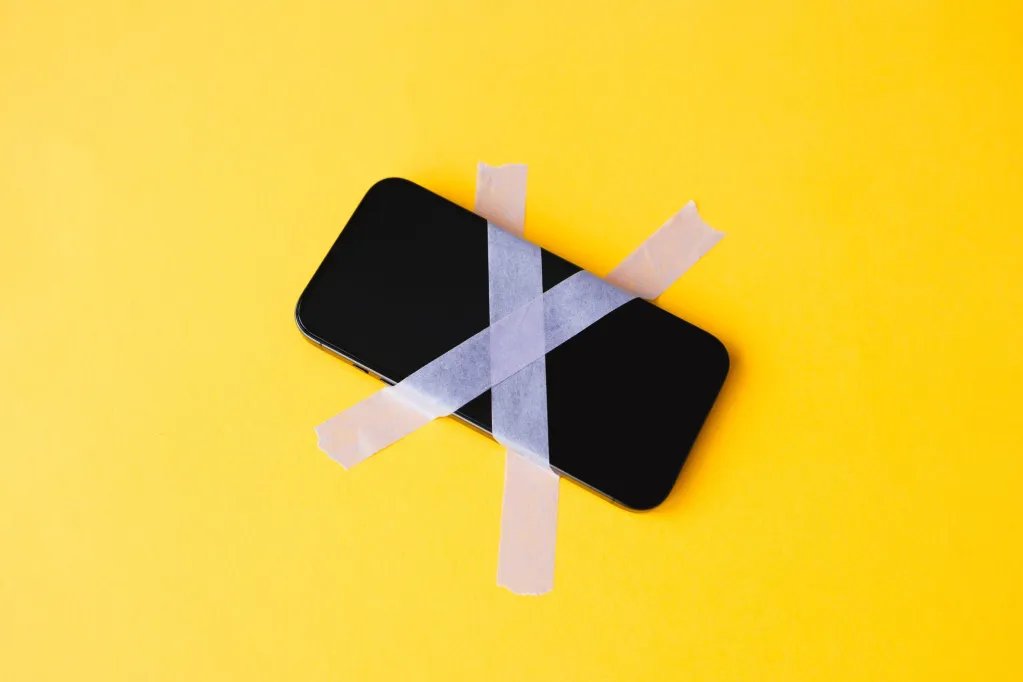
This small gain was found after comparing student results from schools where students had to put their phones in locked pouches with results from similar schools that did not impose such strict bans.
In my interview with Tom Kane, Harvard economist and lead author of the report, he argued that even small improvements matter. He called the pouches, which only cost about $25, a it’s a better bang for your buck than tutoring programs that might improve math or reading skills much more, but would cost thousands of dollars per student.
A previous national studypublished in April 2026, reached a less optimistic conclusion. Researchers from Stanford, Duke, the University of Pennsylvania and the University of Michigan found little to no academic improvement in schools that adopted cell phone pouches. Like the Harvard researchers, they compared schools that required students to lock their phones with similar schools that did not. But unlike the Harvard team, they did not have individual test scores and instead relied on each school’s average scores.
Three major US studies on academic achievement after cellphone restrictions
| Florida (Rochester and RAND) |
National (Stanford, Duke, Penn and Michigan) |
National (Harvard, NWEA) |
|
| Release | October 2025 | April, revised September 2026 | November 2026 |
| What was compared? | Average scores in schools with high or low prior cell phone use | Average scores in schools equipped with lockable pouches compared to those without | Student performance in schools with or without lockable pouches |
| Academic result | +0.6 percentile points | Near zero | +0.0087 SD |
| Other results | Student suspensions increased then decreased | Student suspensions increased then decreased | N / A |
The pouches made a difference. Cell phone use declined more in schools that adopted it, and teachers reported that students were on their phones less during class. Suspensions initially increased as the new cell phone rules took effect, but disciplinary incidents declined after the first year.
THE first of three studiespublished in October 2025, also found a very small academic benefit, although nowhere near as small as that of the Harvard study. It took place in a large district in Florida, where schools that used more cell phones before restrictions saw their average test scores increase 0.6 percentile points more than the scores of schools with lower prior cell phone use. This is equivalent to moving a student from the 50th to the 51st percentile. For many, this increase would be barely noticeable – a rounding error.
Building on that figure, David Figlio, an economist at the University of Rochester and author of the Florida study, said the bans were “helping kids” and that it was a rare case in public policy where “the data supports hunches.”
Critics talk about small numbers
Researchers disagree on this point. And their Ivory Tower debate is now taking place to the thousandth of a standard deviation.
Tom Dee, an economist at Stanford and author of the previous national study, pointed out that the Harvard team’s small positive findings disappeared when they themselves analyzed the numbers in a different way. The Harvard paper reported an even smaller estimate, 0.0068 standard deviations, when the researchers used their originally planned methodology. This result was not statistically significant, meaning the researchers could not rule out the possibility that the academic gains were actually zero.
Dee also noted that the Harvard researchers’ own test of whether their tiny gains were accumulating failed to meet statistical criteria; they could not establish that academic benefits continued to grow in the first two years after the cell phone ban took effect.
Brendan Bartanen, associate professor of education and public policy at the University of Virginia, has publicly stated critical his peers. “In any reasonable world, the effect size here is virtually zero. This intervention did not significantly improve student outcomes (it might still be good policy!),” Bartanen wrote on Bluesky.
“We need to stop doing this as researchers,” he wrote, referring to interpretations that go “beyond (often well beyond) what our results can actually support.” It’s a “wicked problem,” he added, and one that most researchers have addressed.
Other researchers also rushed in. “The magnitude of the effect is not modest” wrote Candice Odgers, professor of psychology at the University of California, Irvine, on LinkedIn. “It’s negligible by conventional standards and talking about it as a massive victory of phone bans on children’s academic performance is… well, strange.”
“I just worry that we’re declaring victory without actually getting a victory for the kids,” Odgers added.
In response to criticism, the Harvard research team justified the need to adjust its methodology due to lack of data. But they agreed that it will take more time to see whether annual improvements will actually translate into substantial learning gains. They maintained their assertion that small wins for students still matter.
“We do not believe that our interpretation goes beyond what our results can support,” the authors of the Harvard study wrote to me by email.
Even Stanford’s Dee, whose study found no academic benefit to cell phone bans, wants the bans to continue. He told me he still found the hypothesis that cell phones were distracting and detrimental to children’s attention spans “convincing.” He hopes that as schools get better at implementing the bans, students will be able to benefit more. As long as students can still chat through Google’s educational apps or access TikTok and Instagram on the personal laptops and tablets they bring to school, classroom distractions remain.
Researchers demand social media data
Another possibility is that the academic harm caused by cell phones is not primarily due to their use during the school day. It could be that all the other hours students spend browsing videos, messaging, and playing games are reducing their attention span, undermining their motivation to read, and reducing their sleep.
Stanford’s Dee and Harvard’s Kane both called on social media companies to share their data with researchers so they can better determine whether cellphone use hurts academic achievement and which activities and times matter most.
“Social media platforms know how much time kids spend on Snapchat or watching YouTube or TikTok during the day and night,” Kane said. “We could answer these questions about in-school and out-of-school use if we had the data.”
For now, many researchers are urging schools to respect these bans. But there’s a difference between believing a policy is worth pursuing and claiming the evidence shows it works.
Contact the editorJill Barshayat 212-678-3595, jillbarshay.35 on Signal, or barshay@hechingerreport.org.
This story on banning cell phones in schools was produced by The Hechinger reportan independent, nonprofit news organization that covers education. Register for Proof points and others Hechinger Newsletters.
The article Three Studies in a Row Show Little to No Academic Gains from Banning Cell Phones in Schools appeared first in the Hechinger Report.