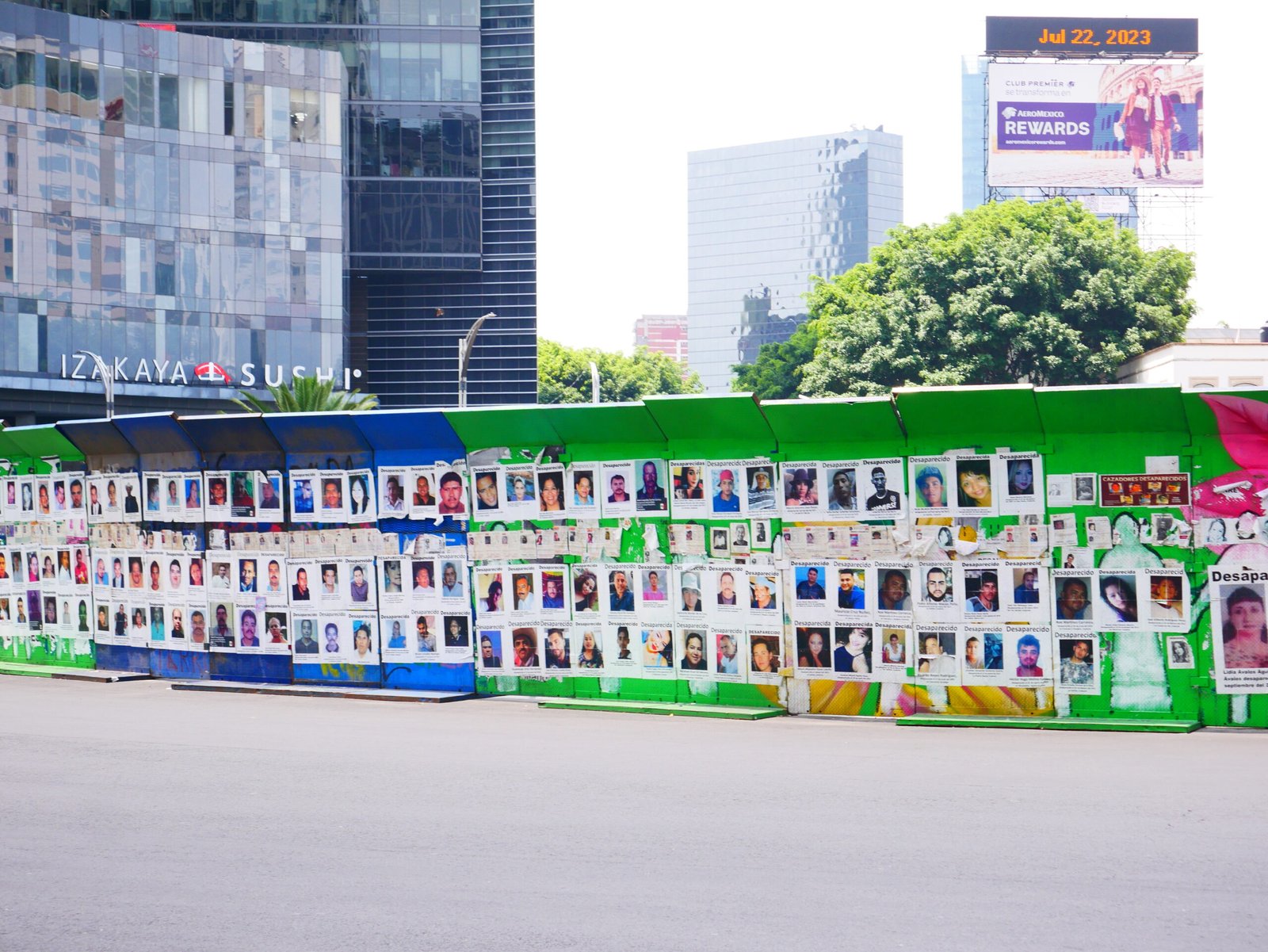
August 30, 2026: International Day of Victims of Enforced Disappearances
Imagine there is a knock on the door and a loved one disappears without a trace. For thousands of families around the world, this is not a nightmare but a lived reality. A tool of terror that manifests itself as a hidden crime, leaving a loud silence that definitely cannot be confused with a peaceful silence of calm. In this architecture of absence, far more blood was spilled than the ink needed to define the act itself. Forced disappearance wipes out a person twice; First, by taking away their physical bodies, and second, by silencing their voices.
Article 2 of the International Convention for the Protection of All Persons from Enforced Disappearance (ICPPED) defines enforced disappearance as “the arrest, detention, abduction or any other form of deprivation of liberty by state agents or by persons or groups of persons acting with the authorization, support or acquiescence of the State, followed by the refusal to recognize the deprivation of liberty or the concealment of the fate or whereabouts of the disappeared person, thereby depriving that person of the protection of the law.” Victims of enforced disappearances are often affected severe abuse and their families are left behind Painuncertain about the fate of the missing person. This trauma leads to emotional turmoil and potential financial stress for these families.
Global Advocacy Efforts by international human rights groups over the years to address concerns about enforced disappearances led to the adoption of the ICPPED Convention in 2006, following the initial text in 1998 Drafting by Louis Joinet for the UN Subcommission on the Prevention of Discrimination and the Protection of Minorities. Yet two decades later, as the world celebrates the 20th anniversary of the adoption of the ICPPED Convention, these efforts have been reduced to pages in a book, headlines in a newspaper, or a comment on a human rights group’s website, as the crime continues to be committed in every region of the world. The convention remains in effect, although it is recognized by individual states problematic in its implementation. This is attributed to governments using enforced disappearances to suppress political action Dissent. Journalists, activists and even children were not spared in this wave of oppression. This raises the question of in whose hands people are safe.
Political disagreements or demands for accountability in various parts of the world have been widely responded to with extrajudicial killings, violence, intimidation and enforced disappearances. For example, in June 2024, during the protests against the Kenya Anti-Finance Bill, tThe Law Society of Kenya reported that there were at least 89 people violent disappeared in connection with the country’s protests against the finance law. In addition, Kenya’s Human Rights Commission observed Enforced disappearances increased by 450% in 2024. Although the number of documented Although the number of cases of enforced disappearances has decreased compared to last year, the persistence of such cases remains extremely worrying.
In Guinea last year, the Committee to Protect Journalists called for the release of a 75-year-old man who was reportedly kidnapped as punishment for his son’s journalism. Currently, over 137 journalists have been reported miss A third of them worldwide are victims of enforced disappearance. When analyzed together, these individual cases suggest that enforced disappearances are of great concern to the international community as a whole and are not solely the purview of individual governments.
In 2026 there will be only 78 countries ratified the ICPPED Convention in addition to 39 signatories. On the International Day of Victims of Enforced Disappearances in 2026, various human rights organizations around the world issued a joint statement calling for the prioritization of all efforts to combat enforced disappearances and the necessity action without delay. Therefore, in order to restore social and political order, States and all stakeholders must continue to steadfastly affirm the primacy of law over violence and the centrality of violence Victim about forgetting. This would inadvertently preserve the irreplaceable value of multilateralism and the international rule of law.
If the duty bearer becomes a violator of the law, the system has failed. Therefore, the International Day of Victims of Enforced Disappearances goes beyond mourning. It is a call for justice, accountability and good governance.