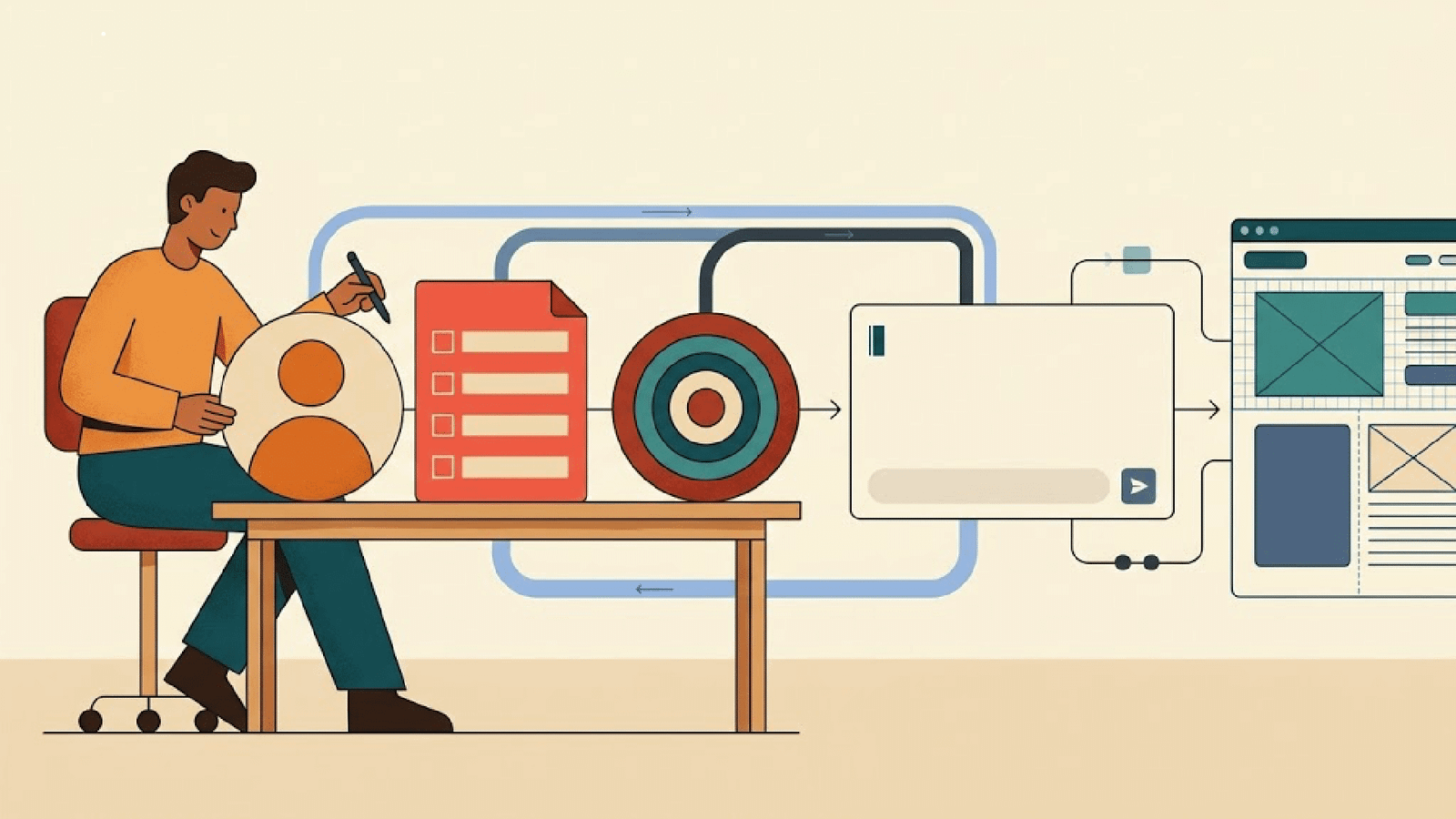
Artificial intelligence can accelerate the development of marketing technology and enable more people to create software. But generating code quickly doesn’t guarantee that the result will meet your business needs.
To get useful results you must first define the requirements before writing a prompt. Established development practices, including user stories and acceptance criteria, can help marketers better direct AI, reduce wasted effort, and improve results.
Define what you need before requesting AI
Defining project requirements takes time and effort. The person who conceived the project may also need to refine the vision as others contribute their perspectives.
AI can generate results in minutes, but that speed is wasted if the results don’t meet expectations. Repeated requests and reviews can consume time and AI credits without moving the project closer to its goals.
Established development practices can help teams set expectations up front and reduce unnecessary iterations.
10x your SEO with Semrush for business.
The most powerful SEO platform in the world, created specifically for businesses.
Request a demonstration
Development practices that improve AI output
Many existing artifacts help define intention. Artificial intelligence also accelerates their creation. These artifacts include:
- Business Requirements Documents (BRDs).
- User stories.
- Acceptance criteria.
- Quick paintings.
- Request logs.
Most tasks will not require all of these items. Changing the order of fields on a form, for example, does not require a formal BRD. A thoughtful user story combined with clear acceptance criteria may be sufficient.
Business requirements documents: Keep the big picture in focus
BRDs are important artifacts that provide detailed business insight for large initiatives. They require stakeholders to state the overall goal and the parameters that determine success.
These documents should take a high-level business perspective. As project participants put the vision into action, they will face countless questions that no one can fully predict. A clear business vision in a BRD helps a programmer, graphic designer or vibe-coder make decisions in line with it.
BRDs are useful when breaking down a large initiative into tasks for various teams.
User Stories: Break projects down into manageable tasks
User stories they are lightweight statements developed by software engineer Kent Beck. They define the who, what and why of a project or initiative.
User stories allow programmers to make fine-grained decisions aligned with a project’s end goal. In Scrum, business stakeholders are responsible for providing a clear vision while the development team is responsible for determining how to achieve it.
A user story is a simple statement that follows this format:
- “As an (actor), I want (a certain functionality) so that (reason).”
This isn’t enough to define the vision of migrating to a different web platform, but user stories fit many associated tasks. For example:
- “As a customer, I want autofill functionality in the address field so I don’t have to type the entire address into the form.”
In Agile frameworks like Scrum and Kanban, user stories help break larger projects into manageable tasks. Other layers, such as Epics, typically fall between project-level requirements and individual user stories.
In vibe coding, for example, using a single prompt to develop an entire website makes it difficult to ensure that all requirements are met. User stories help break down work into smaller, more manageable tasks.
Acceptance Criteria: Specify what success looks like
Acceptance criteria clarify user stories. They shouldn’t dictate how to achieve the goal, but they help specify what the end user expects.
For example, the acceptance criteria for the address autofill user story might include:
- After selecting the user, fill in the “Address”, “City”, “State” and “ZIP” fields.
- Allow free-form entry in the “Street Address 2” field so an individual can provide a specific unit designation (for example, “No. 2,” “Unit 3B,” or “Apartment 108”).
- Add a note stating: “Autofill ensures the address matches postal system standards to ensure accurate delivery.”
- Provide an option for addresses outside the United States that don’t use autofill.
Including acceptance criteria in a prompt ensures that it covers the necessary details.
Prompting Framework: Make every statement count
Prompting frameworks help you structure statements before generating AI output. Like user stories, they encourage you to nail down essential details upfront rather than rely on repeated revisions.
For example, the TAG structure focuses on a task, an audience, and guardrails. Defining them as three essential elements helps fine-tune the natural language for a prompt.
Prompt logs: Build on what works
Prompts record patterns that produce the desired output and encode patterns to avoid. Constantly reinventing the wheel wastes time and causes frustration.
Prompt logs can also include the words needed to produce secure, performant, and sustainable code. IT security and reliability engineers can provide phrases or phrases that vibration coders can incorporate into their recommendations.
How AI changes the way marketers define requirements
As AI allows marketers and other business stakeholders to take a more direct role in code generation, they also need to take more responsibility for defining requirements. Tasks such as developing business requirements documents (BRDs) and user stories are no longer limited to business analysts, product managers and IT professionals.
Artificial intelligence can help with this work. Instead of writing a 15-page BRD from scratch, marketers can use AI to generate a draft. They can also ask the AI to ask clarifying questions before generating code or other complex output. These initial checks help identify missing requirements and prevent wasted efforts.
Marketers still need to drive the process and evaluate the results. This means taking on more of the role of an editor: identifying gaps, clarifying requirements, and ensuring the outcome aligns with the project’s goals.
Faster AI development requires faster requirements gathering
As AI accelerates development, requirements gathering must keep pace. Without clear direction, faster code generation can produce systems that don’t meet business needs or lead to security and performance issues.
User stories, acceptance criteria, and other established development practices help marketers set expectations before generating code. AI can help accelerate this work, but marketers remain responsible for ensuring the results reach their goals.