
Emma, a third grader, cries hot, angry tears when she doesn’t get what she wants. She’s a little too old to cry after losing in games like Foursquare, but she has a “strong internal sense of justice,” as the other teachers and I like to say.
“Emma,” I said. “You are eliminated. You must return to the queue.”
“But that’s not fair!” she moaned. I tell him that his classmates follow the rules – and that the rules matter.
That’s what you’re supposed to tell kids. But she and I both know that her family has been trying to follow the rules since arriving in this country, even though the rules keep changing, and she is under threat of deportation.
As a teacher, I must be consistent, firm, and unwavering, even when my instinct is to cry alongside Emma (not her real name; changed to protect her privacy). So I’m adamant, and she groans all the way to the back of the line. I see her suffering, and it’s hard to play my role – to be the adult in the room so she can be the child – when she’s right that so much of what’s going on around her isn’t right.
Related: There’s a lot going on in classrooms from kindergarten through high school. Follow our free weekly K-12 education newsletter.
The anti-immigration movement reduces children to constitutional assumptions and population statistics. The effects of the policies championed by the movement are not limited to economic indicators or government reports.
They spread through neighborhoods, classrooms and playgrounds. The chaotic, legally unclear reality they create even shapes the way 9-year-olds play at recess, where teachers like me try to remind kids like Emma that rules are supposed to matter.
If we claim that we belong to a country that creates rules to protect children, then we must not forget the obvious: immigrant children are just that: children. To protect the rights of immigrant children, teachers must clearly assume their role as reliable adults. And educators must oppose the recent spate of confusing and unfair immigration policies.
The modern anti-immigration movement has been shaped by decades of organized political messaging that portrays immigrants as political scapegoats for complex social problems: inflation, middle-class stagnation, a strained health care system, and violence against women.
The Trump administration has used this message to expand deportation efforts, expand law enforcement priorities, and restrict avenues for legal immigration. Children bear the consequences, faced with the trauma of family separation and displacement.
Worse, as the administration becomes increasingly brazen, children are no longer just victims of immigration policies: they are direct targets. Thousands of children are now separated from parents at the border, were denied asylum protection and threatened with losing their legal guarantees.
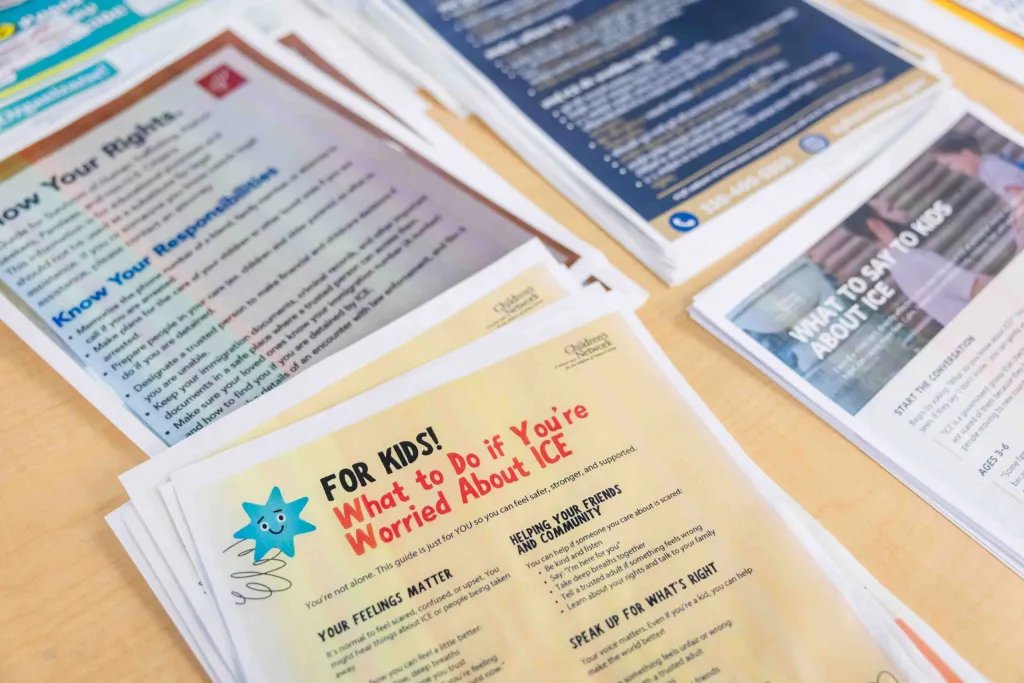
Related: OPINION: ICE Operations Cause Deep Psychological Trauma Among Students, Reduced Enrollment, and Reduced Career Paths
States are propose laws in defiance of Plyler v. Doe, the 1982 Supreme Court decision that declared that all children, regardless of immigration status, must have access to America’s public schools.
The GOP hopes to trigger a lawsuit that will inevitably end up in the Supreme Court, potentially toppling Plyler. If this were to occur, it would represent a sea change in American education policy and in the nation’s moral understanding of children’s rights and values.
Amid all this instability and uncertainty around the rules that shape immigrants’ lives, Oklahoma Republican State Rep. Mike Ritze. suggested that schools identify English-learner students and report them to immigration authorities: “Turn them over to ICE to see if they are really citizens – and do we really need to educate non-citizens?” he asked.
Outside of school, politicians play playtime games and mock the rules, tossing our children around like political footballs.
As teachers, we know the importance of always holding children to high expectations. In our classrooms, we need to be stable adults that children can rely on, so that they have the security to grow, play, explore and take risks.
No matter how cruelly politicians and pundits discuss it, and no matter how desensitized the American people become to this rhetoric, immigrant children are still children.
Children like Emma, who cry at recess after playing foursquare. Children who already experience the injustice of the world and who feel that they may never be welcome in this country.
Emma wakes up every day not knowing if she and her family will be deported. And yet, like all the other children, she goes out to play during recess.
Hannah Harshe is an English language development educator in San Diego, California. She is also the founder of Yoga for Immigrant Justice, a fundraising initiative that supports immigrants in the California and Baja California border regions.
Contact the opinion editor at opinion@hechingerreport.org.
This story about immigrant children was produced by The Hechinger reportan independent, nonprofit news organization focused on inequality and innovation in education. Register with Hechinger weekly newsletter.
The article TEACHER’S VOICE: Teachers once again struggle to support children whose lives are upended by immigration police appeared first on The Hechinger Report.