Carlyle Group Inc. has launched a new portfolio risk framework so that asset values reflect the insurance impact associated with severe weather shocks.
The $475 billion Washington-based firm said the current standard, in which money managers are reactive rather than proactive, needs an overhaul.
“We want to reverse that model and reduce risk so that we can continue to insure assets that are in the crosshairs,” Steve Hatfield, Carlyle’s co-head of global sustainability, said in an interview. But so far, “there is no consistent mechanism for insurers to recognize how asset enhancement reduces risk.”
Asset strengthening, in this context, refers to the process of making the contents of a portfolio more resistant to the effects of rising temperatures. To date, the financial industry’s efforts to construct a theory of returns around climate resilience have often been unsuccessful.
As a result, such risks are often not reflected in valuations until it is too late – in other words, once a building’s roof is torn off in a storm, for example. In this case, insurance coverage may suddenly become more expensive or be eliminated entirely, causing a sharp drop in asset value.
As extreme weather events become more frequent, the need to protect against sudden valuation shocks becomes more urgent, putting pressure on investment managers and banks to catch up.
Carlyle has been working with insurance broker Marsh & Co. to develop the new model, which it said has already attracted interest from some major institutional investors. Abu Dhabi sovereign wealth fund Mubadala and Danish pension manager Sampension are among the institutional investors backing the new approach, which is also based on contributions from engineers, insurers and climate risk experts.
The collaboration will be unveiled on Monday at London’s Climate Action Week, which will bring together participants from government, finance, central banks and academia to discuss how a warming planet is changing the foundations of economies and societies.
Hatfield said the new approach to risk requires portfolio managers to complete four steps. First, they need to estimate the likelihood that the asset will be hit by an extreme weather event (this assessment can also include, for example, the gradual erosion of value caused by rising temperatures or a slow-onset drought).
The next step is to assess how big the gap is between an asset’s current resilience and what actually needs to be done to make it more resistant to conditions such as floods, storms or droughts.
The portfolio manager then needs to estimate how the resilience upgrade will reduce expected losses. Ultimately, insurance companies use these calculations to offer better coverage terms, including premium credits, deductible reductions, and broader coverage.
“The power of this framework is the signaling effect on the market,” Hatfield said. If done right, investors will have a “pot of gold” at the end of the process, he said.
The financial benefits of adopting this model can be huge. A 2025 study by the World Resources Institute indicated Investments in adaptation could yield a tenfold return within a decade.
This question is particularly relevant to current data center construction. According to a recent report by XDI, many of the planned facilities are being built in locations severely exposed to extreme weather impacts such as coastal flooding, heat and river flooding.
“We shouldn’t be building anything new without considering” climate resilience, said Amy Barnes, head of climate and sustainability strategy at Marsh. “It’s much cheaper to design for resilience than to retrofit it.”
Hatfield said he has long been concerned about the impact of climate change on Carlyle’s portfolio in areas such as real estate, chemicals and transportation. But portfolio managers at the company and elsewhere tend to rely on backward-looking models and rely on insurance coverage that doesn’t necessarily predict future risks.
“I ran into a roadblock in getting my investment team to identify near-term return on investment from a cash flow savings perspective,” Hatfield said.
He said his discussions with pension funds, sovereign wealth investors and other fund managers showed “they all have the same problem”.
Over the course of his work, it became clear that the insurance industry, which had always been several steps ahead of banks and investors in measuring climate risk, had a key role to play.
This idea marks a sea change. For many insurers, severe weather risk is a specialty that formally falls under the management purview of the climate and sustainability function. But Marsh’s Barnes said expertise on resilience doesn’t necessarily influence underwriting decisions.
“The underwriters said: ‘Yes, it’s a problem, but I don’t know how to fix it,'” she said in an interview.
Hatfield said he had “previewed” the new framework with leading insurance companies and expected them to conduct road tests in the coming months.
“Today’s infrastructure is really designed for yesterday’s climate, not tomorrow’s climate,” he said. “That’s why we need to accelerate our recovery capabilities.”
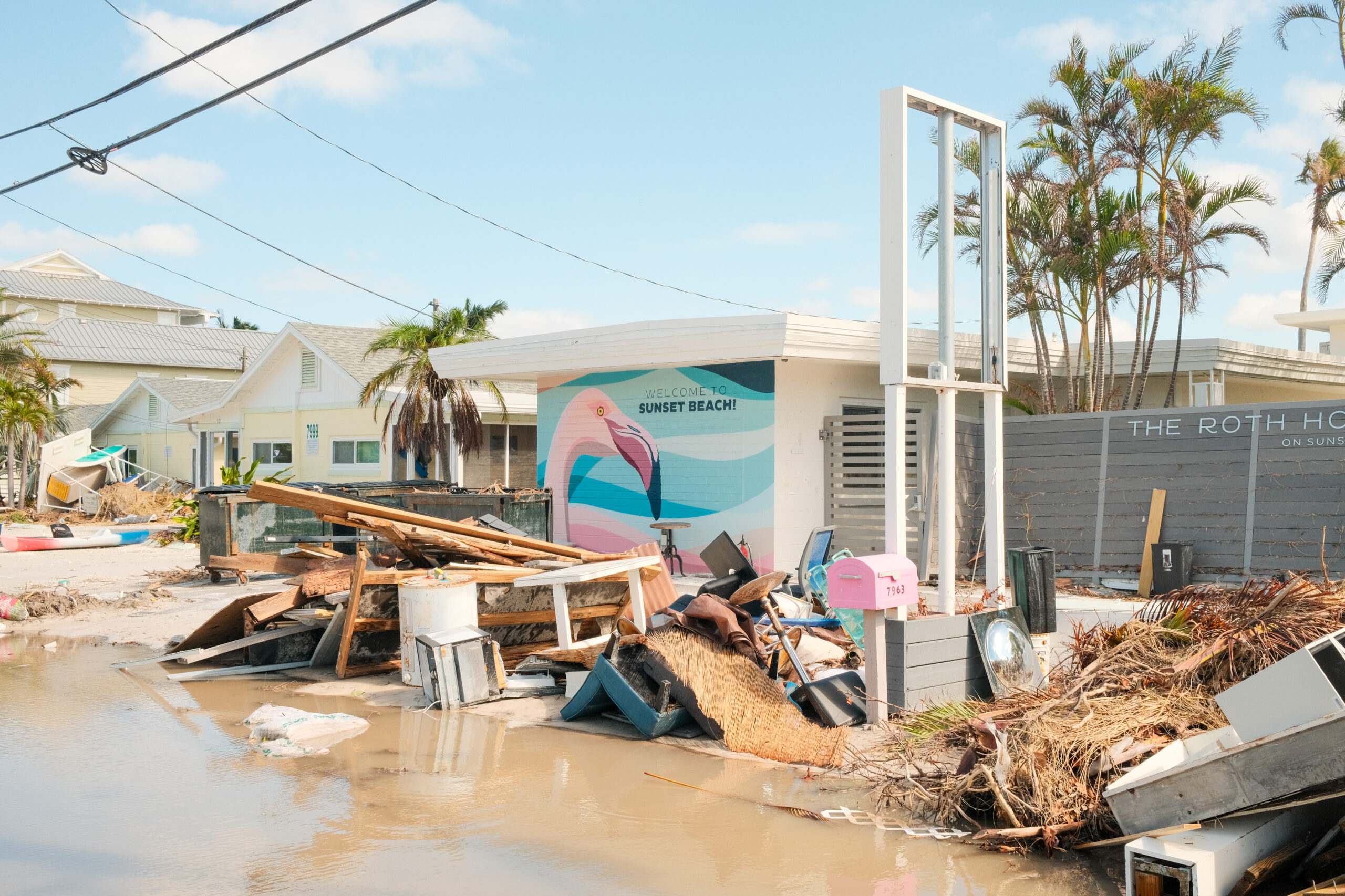
photo: Florida suffers hurricane damage in 2024. Photographer: Tristan Wheelock/Bloomberg
Copyright 2026 Bloomberg.