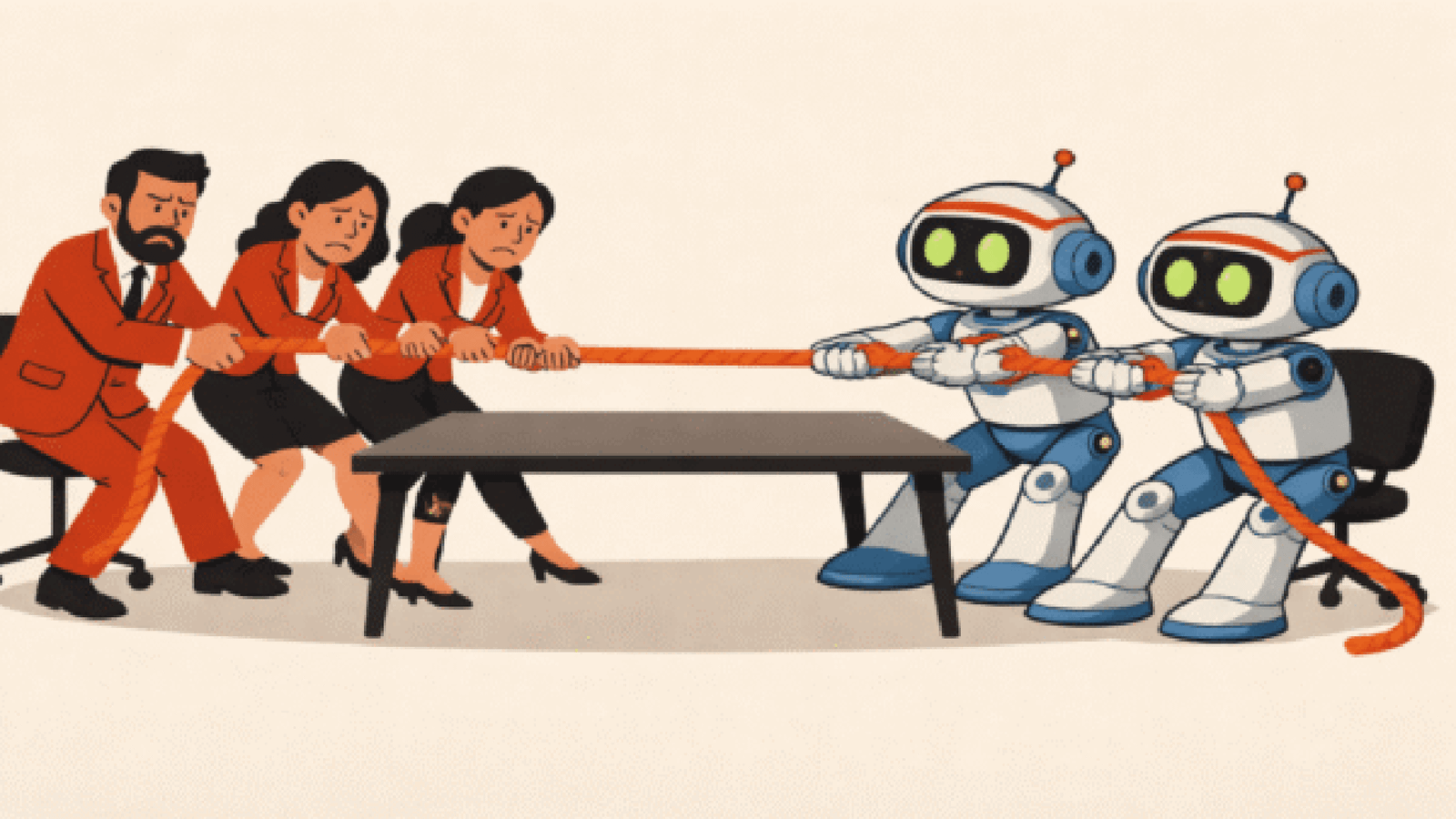
AI is part of every conversation I have with marketers and executives. What can AI do for me? What do we need to do to achieve this? What comes next? You can no longer dismiss or ignore AI. It represents both a promise and a threat, and both can impact your company’s success and competitive advantage.
I spent much of 2026 working with marketers and executives to solve business challenges. I have also worked extensively with ChatGPT and Claude, developing tools and expanding my understanding of AI as a strategic and tactical advisor.
Three themes emerged from those experiences and conversations: the promise and risks of AI, the importance of governance, and the growing role of MCPs in marketing technology decisions.
10x your SEO with Semrush for business.
The most powerful SEO platform in the world, created specifically for businesses.
Request a demonstration
1. The promise and threat of AI are clear
In my 26 years in this industry, I have seen many technological changes, but nothing has spread from large enterprises to the middle market as quickly as artificial intelligence. The conversations have changed too.
AI is in your ESP, inbox, martech automations, workflow manager, and personal organizer.
The promise: AI automation of everything from repetitive day-to-day tasks to strategic consulting can give you time. The time you asked for to free up your mental space for analysis, trend spotting, strategic planning and goal setting – everything you’ve put aside in the past to push campaigns forward.
I developed an AI-powered insights dashboard that gives customers insights across all their channels at once and offers recommendations and guidance based on that entire picture.
The threat: AI can send you down the wrong rabbit hole. You don’t realize it was a mistake until you’ve wasted countless hours because you gave your AI helper the wrong information or didn’t think through the strategic step.
This happens more often with AI because it takes friction out of the thinking process. We no longer have that lag between conceiving an idea and generating results. It’s so easy to tell the AI what you want and how to do it. But if you haven’t thought through the whole process, you will create a big mess that will waste your time. Ask me how I know. (Tip: Read “Develop your AI skills with a helpful home project.”)
My clients ask me, “What are the right steps to create something and how can I make it so that it is useful?” I always come back to the strategic level, the one that people often skip because they have little time. Now you have to take the time.
AI gives us a runway to quickly launch projects without the right setup. We need precautionary measures – long-term strategic planning – to keep us on target.
2. AI can – and should – say no
Governance can be as yawn-inducing as strategic thinking, until you think of it as creating guardrails against harm inflicted by AI.
For humans, saying no is fraught with fear. If you say no to your boss, or his boss, or his boss’s boss, you could get fired. But the AI has no problem saying no and supporting that refusal.
I found this out the other day when I told Claude to do something, and he immediately refused. Maybe not as creepy as HAL-9000 when he said, “I’m sorry, Dave. I’m afraid I can’t do it” in 2001: A Space Odyssey. But he was equally firm.
“What do you mean ‘no’?” I slurred.
“The terms and conditions of this site don’t allow me to do that,” Claude responded. (At least he didn’t add to HAL’s subsequent insult: “This mission is too important to me to let you jeopardize it.”)
This told me that Claude reads the terms and conditions and other fine print that I usually ignore. So we went in a different direction to comply with the Terms and Conditions. I was extremely frustrated with the “no”, but rules are rules, even if you don’t like them.
Guardrails like that protect your company from abuse, mistakes like terms and conditions violations, leaks of sensitive information, or everyone’s secret fear that the AI will go rogue and start spitting out emails.
SaaS providers should take note. Many have not updated their Terms and Conditions to accommodate new technology. You might think that AI allows customers to do what they want, but the door can be closed because of something as simple as a T&C that doesn’t have the clarity of your technology.
3. Marketers want MCP
MCP stands for Model Context Protocol, which is like having a bridge that your AI model can use to connect to external databases and other resources.
MCP is quickly replacing the API as the must-have feature marketers want in new applications. When reviewing new technology platforms in RFPs, they ask questions like these:
- Do you have an MCP?
- What is the functionality?
- Is he headless?
- What experience can I expect when I connect my AI to your platform?
- How easily can I import and access data?
- What controls do you use?
When I review a website I’m considering for development, I look for an MCP. If I don’t see it, it’s an immediate exit. If I log in, Claude might tell me that the MCP is weak or won’t let us do what we want. This is another quick goodbye.
This impacts how you evaluate and select technology vendors. You need to understand what an MCP can do and how to use it to have informed discussions with suppliers.
I spoke with a customer’s ESP representative about how much the technology would cost. What could we do? What couldn’t we do?
I explained to the representative everything I use the MCP for on behalf of my client. He listened to me carefully and gave me several helpful suggestions. Here’s how the conversation will go if you take the time to understand the technology, ask questions, and even ask, “What other questions should I ask?”
One change I’ve noticed this year: Marketers are taking an active role in this process, not just leaving the technology issue to IT. Marketers are realizing the practical applications of AI and having informed conversations about their perspectives. They are the ones who will succeed.
Marketers have always been tech-savvy. What’s new is the involvement of marketers in technological decisions. What does this mean for marketers who aren’t ready or informed? You may be on the outside watching as technology overtakes you.
Artificial intelligence changes the program, but the profit remains the same
We once thought that concepts like “right channel/right message/right time,” large-scale marketing automation, and real-time personalization would give us more time for strategy, research, testing, and insights instead of just continuously executing.
We’re not there yet, but we’re much closer now than before.
My advice to you: stay engaged, keep asking questions, and don’t get offended when your AI assistant tells you no. This is just another opportunity to learn more and find the right path to your success.