
To avoid spending their young adult lives in debt, students have long been advised to stay in-state to pursue their college education. After all, the mission of public universities, funded by taxpayer dollars, is to provide an affordable, high-quality education to the state’s residents.
Yet in 34 states, it costs students from low-income families at least a third of their household income — more than $10,000 a year — to attend the state’s flagship university. This includes not only tuition, but also room and board and books, after taking into account all grants and scholarships – what is called the “net price.”
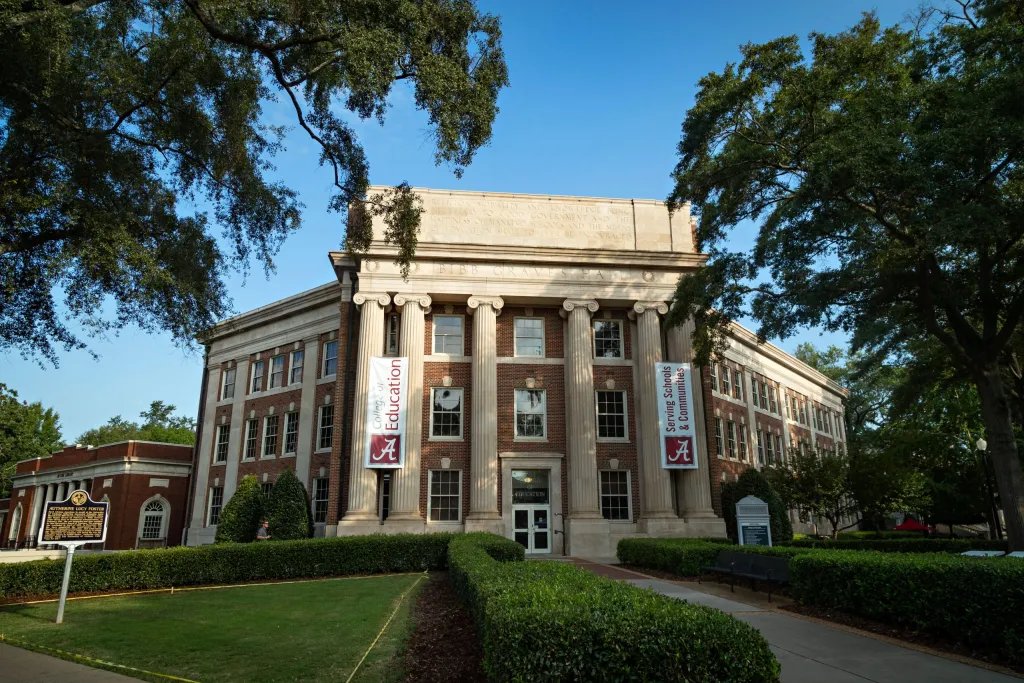
Take Alabama, which had one of the highest prices for public colleges in the country in 2024, the most recent data available. A student from a family in the state that earns less than $30,000 a year was expected to pay more than $19,000 a year on average for tuition and other fees at the University of Alabama, the flagship university. So did Pennsylvania State University.
And it’s not just about flagship universities. At more than half of public four-year colleges across the country, including regional public institutions as well as large research universities, in-state students from families earning less than $30,000 faced this same nearly impossible financial juggle: On average, they had to pay more than a third of their family income to attend.
Net prices at public universities have declined in recent years, when adjusted for overall inflation, but salaries have not kept pace as the costs of housing, food and health care continue to rise, and low-income families continue to struggle to finance their education.
Some states have been more successful than others in controlling costs. Florida – just across the border from Alabama – had among the least expensive four-year public colleges in the country. This is largely because the state Legislature has maintained funding for higher education and capped tuition over the past decade.
Mouse over the map to see the cost for each state.
(function(){function e(){window.addEventListener(`message`,function(e){if(e.data(`datawrapper-height`)!==void 0){var t=document.querySelectorAll(`iframe`);for(var n in e.data(`datawrapper-height`))for(var r=0,i;i=t(r);r++)if(i.contentWindow===e.source){var a=e.data(`datawrapper-height`)(n)+`px`;i.style.height=a}}})}e()})();
Even if students from families earning less than $30,000 take out the maximum federal student loan allowed ($5,500 for freshmen), attending one of the nearly 300 public four-year colleges still costs them at least $4,500 more in their first year alone, even if they stay in-state. The same was true at more than 50 public two-year colleges that also offer bachelor’s degrees.
Hover over each dot to see the college name and average cost.
(function(){function e(){window.addEventListener(`message`,function(e){if(e.data(`datawrapper-height`)!==void 0){var t=document.querySelectorAll(`iframe`);for(var n in e.data(`datawrapper-height`))for(var r=0,i;i=t(r);r++)if(i.contentWindow===e.source){var a=e.data(`datawrapper-height`)(n)+`px`;i.style.height=a}}})}e()})();
The situation was not much better for students from families earning between $30,000 and $48,000. They had to find a significant portion of their annual income, $5,000 — after all grants and maximum student loans — from nearly 300 public four-year colleges, even when they enrolled in-state.
About 1 in 6 American households earn less than $30,000 one year. More than one in four people earn less than $50,000.
(function(){function e(){window.addEventListener(`message`,function(e){if(e.data(`datawrapper-height`)!==void 0){var t=document.querySelectorAll(`iframe`);for(var n in e.data(`datawrapper-height`))for(var r=0,i;i=t(r);r++)if(i.contentWindow===e.source){var a=e.data(`datawrapper-height`)(n)+`px`;i.style.height=a}}})}e()})();
The state’s flagship universities boast some of the highest graduation and job placement rates among public universities, making them a crucial path to a secure financial future for students who grew up in poverty. Their affordability, however, depends on where you live.
Students from families earning less than $30,000 paid a little more than $1,000 out of pocket for tuition and other fees at the University of Michigan and about $2,000 at flagship institutions in Florida, North Carolina and Illinois. Pennsylvania State University and the University of Alabama were the most expensive for low-income families, but flagship institutions in New Hampshire, New Jersey, Oregon and Iowa also cost students whose families earn less than $30,000 more than half their annual income.
(function(){function e(){window.addEventListener(`message`,function(e){if(e.data(`datawrapper-height`)!==void 0){var t=document.querySelectorAll(`iframe`);for(var n in e.data(`datawrapper-height`))for(var r=0,i;i=t(r);r++)if(i.contentWindow===e.source){var a=e.data(`datawrapper-height`)(n)+`px`;i.style.height=a}}})}e()})();
It’s not just the flagship product that’s expensive in Alabama. The state’s other public colleges were, on average, among the most expensive in the country for families earning less than $48,000. (A University of Alabama spokesperson said the average net price for families earning less than $30,000 fell about 6 percent in 2024-25, bringing it to about $18,000; it fell 12 percent for families earning between $30,001 and $48,000, he said.)
The University of North Alabama, which costs the least for low-income students in the state, still had a net price of nearly $10,000. And half of Alabama’s public colleges cost more than $14,000 for students whose families earn less than $30,000.
(function(){function e(){window.addEventListener(`message`,function(e){if(e.data(`datawrapper-height`)!==void 0){var t=document.querySelectorAll(`iframe`);for(var n in e.data(`datawrapper-height`))for(var r=0,i;i=t(r);r++)if(i.contentWindow===e.source){var a=e.data(`datawrapper-height`)(n)+`px`;i.style.height=a}}})}e()})();
There are cheaper public colleges scattered across the country, and some students save money by starting at a community college and then transferring, although this route is not always available. At just over 60 public four-year colleges, the net price for families earning less than $30,000 was $5,000 or less in 2024. New York City, where most students do not live on campus, is home to seven colleges that cost less than $1,600.
(function(){function e(){window.addEventListener(`message`,function(e){if(e.data(`datawrapper-height`)!==void 0){var t=document.querySelectorAll(`iframe`);for(var n in e.data(`datawrapper-height`))for(var r=0,i;i=t(r);r++)if(i.contentWindow===e.source){var a=e.data(`datawrapper-height`)(n)+`px`;i.style.height=a}}})}e()})();
Methodology:
Where does this data come from? These charts use the federal government’s definition of net price, which attempts to capture the total cost of a student’s education. It includes room and board, books and supplies, tuition and required fees, less grants and scholarships for first-time, full-time, dependent students (those still in the care of their parents). We use income brackets below $30,000 and between $30,000 and $48,000 because that is how the data is stored in the Integrated Postsecondary Data System (IPEDS). The national median household income was about $81,600 in 2024, but it varies considerably by state, from a high of nearly $105,000 in Massachusetts to about $59,000 in Mississippi.
How did we choose which dataset to use? Dozens of public colleges across the country offer two-year (associate) and four-year (bachelor’s) degrees, and the cost of an associate’s degree tends to be less. The government does not calculate the net price per degree. The net price is calculated as an average for all students who attend a particular college, not based on the degree they earn. For this reason, we looked only at public four-year colleges that primarily grant bachelor’s degrees (more than 50 percent of students) to avoid including colleges where the cost would be artificially reduced by students pursuing their associate’s degree. We made this choice because we wanted to be able to compare prices more fairly between states. Some states have many two-year colleges that grant bachelor’s degrees and others have none, so including two-year colleges where only a minority of students earned bachelor’s degrees could have resulted in a misleading comparison. Yet if you include all public colleges that grant four-year degrees, there are nearly 350 public colleges where it costs students whose families earn less than $30,000 to attend more than a third of their income.
How many colleges cost low-income families a third of their income? At 291 of 553 four-year colleges with data for 2023-24, the most recent year for which data is available, the net price was $10,000 or more for students from families earning less than $30,000. This was also true for 57 other, mostly two-year colleges that offer four-year degrees.
Why did we use the median of an average to compare states? The federal government calculates the average net price for each college, which we used to show how much, on average, students in different income brackets would have to spend to attend each college. We decided that the median of the overall averages, instead of the average of the averages, would give a more accurate idea of how much students are paying since it represents the middle figure: in half of the colleges in each state, the average low-income student pays more, and in half of the colleges, they pay less.
Contact senior investigative reporter Meredith Kolodner at kolodner@hechingerreport.org or on Signal: @merkolodner.04.
This story about the cost of college was produced by The Hechinger Report, an independent, nonprofit news organization focused on inequality and innovation in education. Subscribe to ourhigher education newsletter.
The article These Maps Show How Expensive Public Schools Can Be for Low-Income Students appeared first in the Hechinger Report.