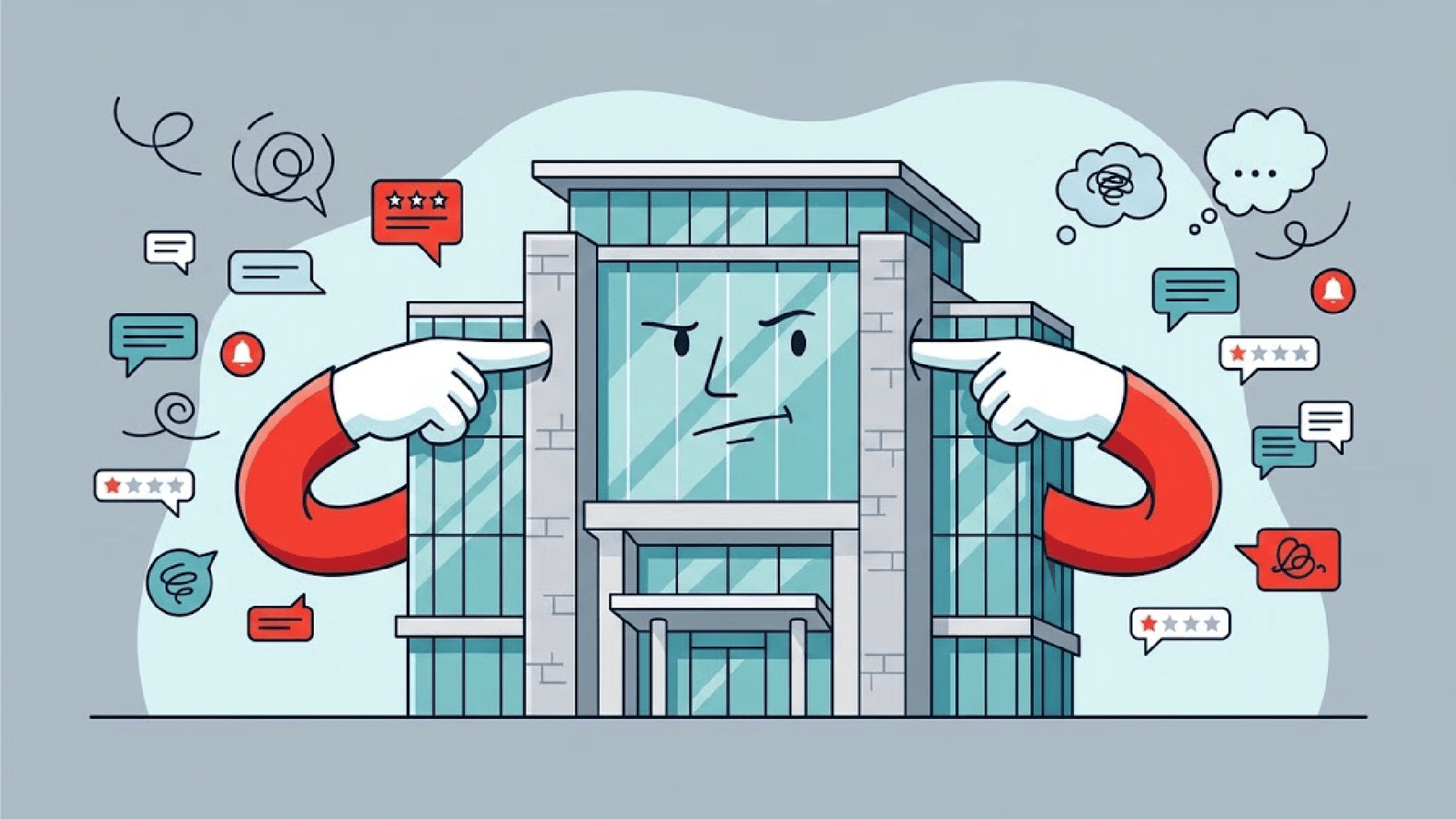
Your brand is based on what customers experience, not what marketing says. This makes understanding and correcting the daily interactions that shape customer perception as important as any campaign, creative or brand guideline.
Marketing may influence what customers expect, but the rest of the organization determines whether those expectations are met. The brand’s promise of simplicity means little when paying is a pain. A customer service promise falls apart when someone spends an hour waiting for support. And a refined campaign can make the disconnect even more apparent when the experience doesn’t match.
These gaps show up everywhere. Wait times, return policies, website flows, support interactions, employee behavior, and automated responses all contribute to what customers think of a company. If marketing continues to promote a refined version of the brand while customers experience something else, you’re throwing money away by advertising a promise that the company doesn’t deliver.
Customer perception ultimately belongs to the customer. You can nurture it, grow it, or remind people of what you stand for, but you don’t get the final vote. People will experience your company in ways that no brand strategy document can predict.
Listen when clients aren’t performing for you
Start by changing the way you listen. Stop asking for feedback directly. And for the sake of humanity, stop asking customers how likely they are to recommend your company, product or service on a scale of one to 10.
Consumers see this demand everywhere and are tired of it. It gives you almost no actionable data about the emotional connection someone feels towards your business.
10x your SEO with Semrush for business.
The most powerful SEO platform in the world, created specifically for businesses.
Request a demonstration
Plus, customers don’t always tell companies what they really think. As Geoff Tuff, Steven Goldbach and Elizabeth Lascaze write in “Harvard Business Review,” “Companies can’t improve operations without honest, substantive feedback.” The problem is understanding this: Customers may be reluctant to provide honest feedback in the first place.
This makes places where customers talk without being spoken to particularly useful. Reviews on Yelp, Trustpilot, and app stores can expose recurring frustrations. Reddit and niche online communities show how people talk about you when you’re not directing the conversation. Social media behavior – what people comment on, share or save – adds another insight into what elicits a reaction.
There is also a huge amount of customer feedback already present in most companies. Call center transcripts, support tickets, chat logs, and social comments contain the language customers use to describe what it’s actually like to deal with you.
Artificial intelligence and natural language processing tools can make this volume manageable. Don’t settle for an overall sentiment score. Look for recurring complaints, changes in how customers describe the company, repeated problems with particular touchpoints, and places where the experience conflicts with what the marketing promises.
Direct feedback can fill gaps when it’s tied to a specific interaction. A short, one-question survey right after checkout or a support conversation will tell you more about that experience than another request to rate the entire company.
The goal is to listen to what customers say when you ask and, more importantly, when they don’t know you’re listening.
Fix the experience behind the feedback
Listening is the easy part. If customers repeatedly complain about checkout, support, order fulfillment, or an aggressive sales process, you need to fix the problem. Another campaign will do no good.
The solution probably lies well outside of marketing. Frontline employees need enough authority to solve common problems rather than just direct customers through a process. Incentives matter too. If my bank says it cares about customers but rewards employees for turning every service interaction into a sales opportunity, then it doesn’t care about customers.
Automation creates another opportunity for brand promises to collide with reality. Businesses rush to deploy AI chatbots to reduce costs and response times, but robotic efficiency isn’t a win when the customer still can’t get a response. An automated interaction must solve the problem by behaving as the company’s customers were promised.
And when customer feedback makes a change, tell people. If customers repeatedly complain about a broken checkout process or an infuriating support policy and you fix the problem, say so. Otherwise, the people who complained might never know anyone was listening.
Solving a problem doesn’t solve the question of how customers perceive your brand. Keep looking at the comments.
Reviews, customer service logs, social conversations, behavioral signals, and direct feedback each give you part of the picture. No one is the ultimate source of truth, so examine them for recurring patterns and link them to specific customer interactions.
If marketing promises convenience, find out where customers continue to run into obstacles. If it promises expertise, look for moments when customers can’t get helpful answers. If it promises personalized service, see if your automation, policies and front-line employees deliver it.
Your true brand isn’t found within the brand guidelines deck. It’s built every day in checkout flows, in support calls, in automated conversations, and in all those raw customer reactions that marketing would probably rather not read.