Several members of the cannabis industry are filing additional lawsuits against the state of Texas, claiming that the ban on nearly all hemp-derived THC products has led to massive job losses and created a monopoly on the state’s medical marijuana program.
Four cannabis retailers filed a lawsuit on Wednesday in the U.S. District Court for the Western District of Texas, alleging the Texas Department of State Health Services administrative overreach by classifying hemp-derived substances as illegal in violation of the 2018 Farm Bill, which removed hemp-derived substances from the federal Controlled Substances Act.
“Thousands of small business owners have built businesses, hired workers and made investments under this law,” David Sergi, the cannabis industry’s lead attorney on the case, said in a press release. “DSHS does not have the constitutional authority to rewrite regulations or destroy an industry simply because it disagrees with legislative policy.”
The complaint alleges that the cannabis industry has suffered “catastrophic” harm as a result of DSHS’s regulatory decisions, with more than 36,000 jobs lost due to a reduced workforce, retail sales down more than 50%, resulting in billions of dollars in lost revenue and inventory stranded across Texas.
The lawsuit also alleges that DSHS’s decision to focus solely on the cannabis industry illegally shut down the market while protecting the state-licensed medical marijuana program, the Texas Compassionate Use Program (TCUP).
In addition to the complaint, the plaintiffs filed for a temporary restraining order and temporary injunction to lift the ban on these THC products.
“We ask the court to uphold the Texas Constitution, protect thousands of Texas jobs, and keep policy decisions where they belong — with elected representatives,” Serge said.
Earlier this month, three different members of the cannabis industry sued Texas, saying its ban on hemp-derived THC violates business protections.
Two cannabis retailers and a distributor filed a lawsuit in the U.S. District Court for the Southern District of Texas against the Texas Department of State Health Services; Attorney General Ken Paxton; and the Galveston County Criminal District Attorney and Sheriff, alleging that classifying cannabis-derived substances as illegal violates the 2018 Farm Bill, which removed them from the federal Controlled Substances Act.
The complaint states that the reinstated definition does not distinguish between legal and illegal hemp; that the 2018 Farm Bill preempts protections for the interstate hemp market; and that these classifications impose unconstitutional burdens on interstate commerce.
“For more than seven years, Texans have built a multibillion-dollar marijuana industry based on laws that defined these products as legal marijuana. Without any changes to those laws, the state is now calling them a Schedule I drug, just like heroin,” Andrea Steel, the marijuana industry’s lead attorney in the case, said in a press release
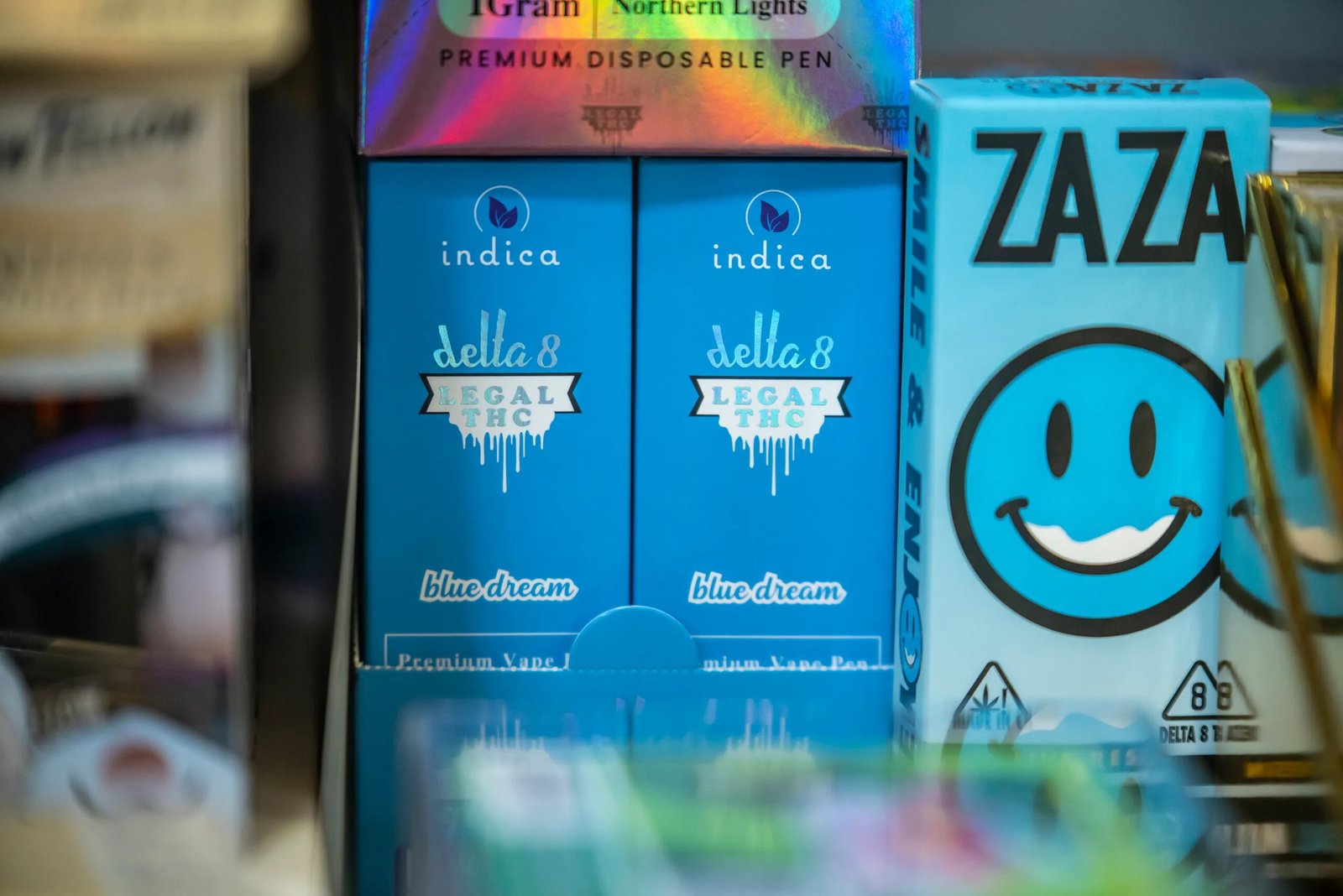
State officials late last month banned several hemp-derived THC cannabis products, including those containing delta-8 and delta-10 THC variants, imposing jail terms and fines for those in possession of the products. However, delta-9 THC, the most common THC product in Texas, will remain legal.
Marijuana experts say that now that THC variants are classified as a Class I drug, possession of illegal THC products will be considered a state jail felony, punishable by 180 days to two years in prison and a fine of up to $10,000.
“Our Constitution does not allow the government to imprison a person under a framework that no one can understand – our clients are asking the federal courts to protect Texans from their chaotic government,” Steele said.
Marijuana experts say more than half of the THC products in stores could be removed from shelves if the ban is not lifted.
“It’s a pretty big blow and it’s recriminalizing a lot of cannabis products that have been perfectly legal and allowed in the state for years, so we’re moving backwards toward prohibition,” Sarah Todd, media representative for the Texas Marijuana Policy Center, previously told the Tribune.
The recent changes stem from a May ruling by the Texas Supreme Court that allowed the Texas Department of State Health Services to reclassify all cannabis-derived THC (except low-dose delta-9 THC) as a Schedule 1 drug, prohibiting possession and sale in the state. The ruling ends a 2021 injunction that suspended DSHS from enforcing a new classification that effectively allowed stores to stock different kinds of THC over the past five years.
The ban applies to all synthetic forms of THC, including delta-8, delta-10, THCP and THCA flower. One exception is delta-9 products, which contain less than 0.3% THC by dry weight.
Delta-9, which occurs naturally in cannabis and is not typically synthetically derived, will remain the only THC option for Texas consumers because the federal 2018 Farm Bill legally defines hemp as cannabis containing no more than 0.3% Delta-9 THC and no other cannabinoids are listed.
It’s the latest blow to the state’s cannabis industry, which lawmakers promised was here to stay but has been rife with uncertainty over the past few months as a series of court lawsuits pulled products from shelves and then put them back on shelves.
A statewide ban on the sale of smokable marijuana, such as buds and rolls, was scheduled to take effect on March 31, but a court ruling has put that ban on hold so delta-9 smokable marijuana will remain available to consumers.
Texas banned the sale of vape pens containing THC last legislative session.
Several lawmakers have pledged to continue their opposition to marijuana in the upcoming legislative session, advancing arguments against THC that are reminiscent of the “Just Say No” movement of the 1980s about the risks of THC use and its effects. Committee members used the analogy of a frying pan and the brain to illustrate how these products can contribute to mental health problems in young people.
Lubbock Sen. Charles Perry has confirmed that he will reintroduce a bill to ban the consumption of cannabis products during the next legislative session.
According to the state Department of Health Services, approximately 14,000 retail stores across the state are licensed to sell marijuana for consumption.
This article first appeared in The Texas Tribune.
Photo: A variety of Delta 8 THC products at Valero Station in Spring Branch on February 9, 2023. Sergio Flores, The Texas Tribune
theme
Texas Marijuana Litigation