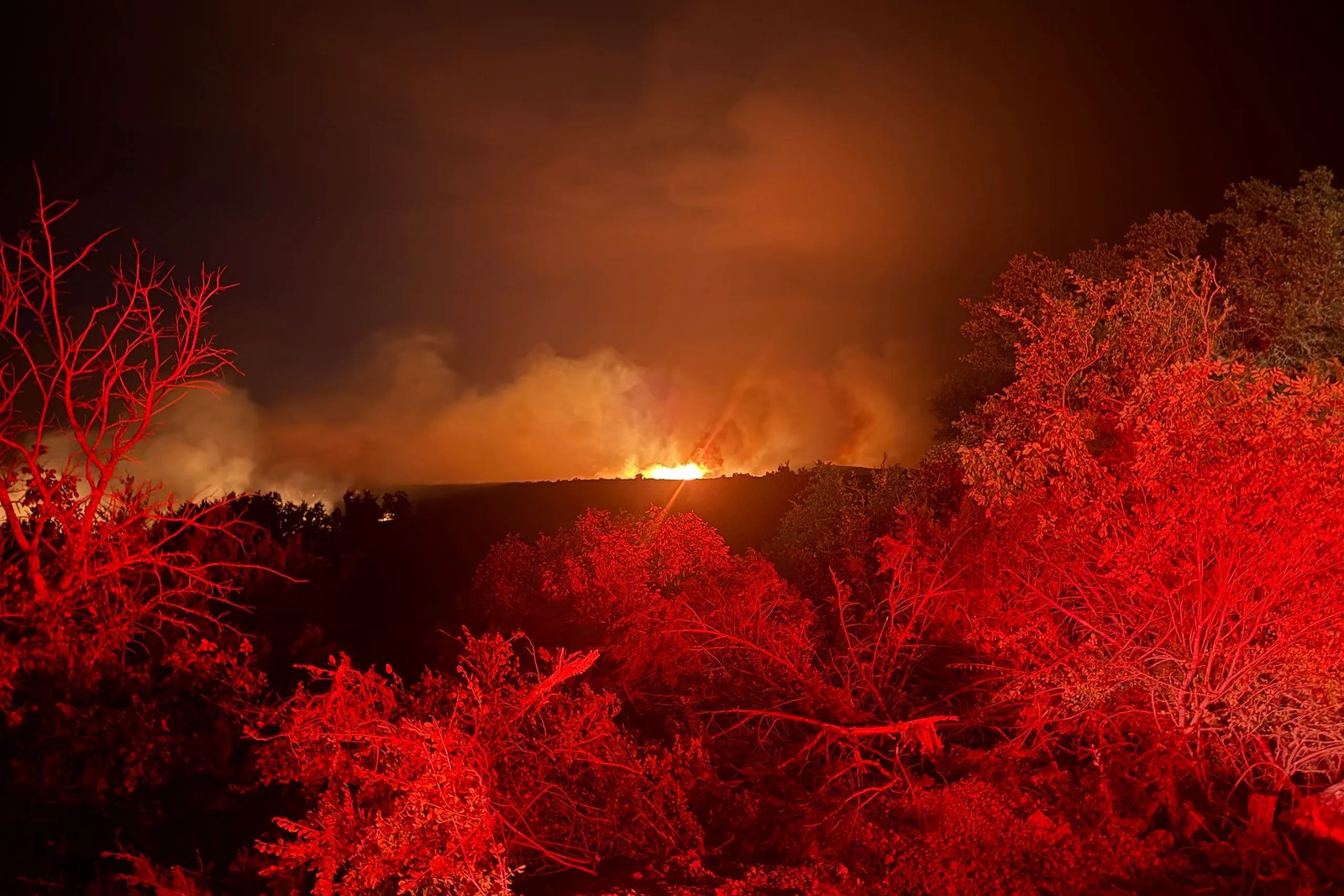
The Ross Fire has become one of the largest wildfires on record in the Dallas-Fort Worth area, burning 85,000 acres in Palo Pinto and Jack counties in just three days.
The fire started near Palo Pinto on Monday and spread at an alarming rate through dry pasture. As of Tuesday, officials reported the fire had doubled in size to about 50,000 acres in a matter of hours. By Wednesday, estimates had climbed to more than 80,000 acres.
As of Friday morning, the Texas A&M University Forest Service said the fire was 26 percent contained, which refers to the portion of the fire where firefighters have set up perimeters or barriers to prevent its spread.
Firefighters reported extreme fire behavior, including trees burning in clusters amid strong winds.
There have been no reports of injuries from the fires, but some rural residents have been advised to evacuate over the past three days, with officials telling residents in or near affected areas to be prepared to evacuate quickly if conditions change.
Officials have closed multiple roads in Palo Pinto County, including portions of U.S. 180 and Texas 254, as crews continue to respond to the fire.
As much of the state experienced extreme heat, the Forest Service reported that 80 fires burned more than 90,700 acres in Texas, including the Ross Fire. Many of them have been fully contained.
The Forest Service reported that several structures were affected by the Ross Fire, including Worth Ranch, a historic 800-acre Boy Scouts of America camp along the Brazos River. The extent of property damage was unclear.
The Ross Fire is now the second-largest wildfire in the region’s history, behind only the Possum Kingdom Complex Fire in April 2011, which burned 126,734 acres, according to the National Weather Service’s Fort Worth office.
Response teams battling the Ross Fire include the small rural departments closest to the fire, the Texas A&M University Forest Service and local fire departments around the Dallas-Fort Worth area.
According to the Texas A&M University Forest Service, the top priorities are protecting people, defending communities and critical structures, slowing the spread of fires and building lines of defense that will ultimately contain the fires.
Gov. Greg Abbott announced Tuesday that the Federal Emergency Management Agency has approved a Fire Management Assistance Grant for the Ross Fire, providing local agencies with financial assistance and reimbursement for eligible firefighting expenses.
Parts of Jack County were ordered to evacuate Tuesday as the fire spread north. The order was later lifted as conditions improved, but officials continued to warn residents to remain vigilant. Palo Pinto County had issued voluntary evacuation advisories for areas threatened by the fire, but those notices have also been lifted.
An evacuation center has been set up at the Jacksboro Twin Lakes Recreation Center, and a livestock transfer center has been set up in the area for residents who need a place to house cattle and other animals.
Smoke from the Ross Fire has been moving east and southeast into parts of North Texas, causing orange, hazy skies and affecting air quality. The state’s environmental regulator said people with respiratory illnesses, children and the elderly in areas where smoke drifted were advised to stay indoors.
Temperatures in the Fort Worth area are expected to be near 100 degrees on Thursday, with some scattered showers. The Bureau of Meteorology reports that the fire threat will be lower than earlier this week.
This article first appeared in The Texas Tribune.
Photo: The Ross Fire broke out in Palo Pinto County on August 24, 2026 and has since spread to more than 80,000 acres in Palo Pinto and Jack counties. A. Turner/Texas A&M AgriLife
theme
Trending DisastersTexas Natural DisastersWildfires
interested in disaster?
Get automated alerts on this topic.